
Puppy Grooming in Kirkland WA
22 Years of Experienced Puppy Grooming Brought Straight to Your Door
Concerned about your Puppy's 1st Groom? • Current Puppy Grooming not working out?
Get a Private, Certified Groomer with 22 Years of Puppy Grooming Expertise at your Door – Call (425) 820-1000
🎓 Certified Small Dog Specialist (Under 25 lbs)
🐾 22 Years of Professional Grooming
📍 Women Owned, Locally Operated in Kirkland, WA
🗓️ Fast & Easy Online
Booking 24/7
Expert, cage-free mobile puppy grooming Kirkland families have trusted for over 15 years. Specializing exclusively in a gentle, fear-free, one-on-one groom tailored to desensitize young dogs to lifelong grooming habits. My fully self-contained Mercedes Sprinter mobile salon arrives directly in your driveway to deliver slow, positive sound and touch conditioning across 98033 neighborhoods, including the Highlands, Norkirk, and North Rose Hill. Don't have a Puppy?
View all my dog grooming services.
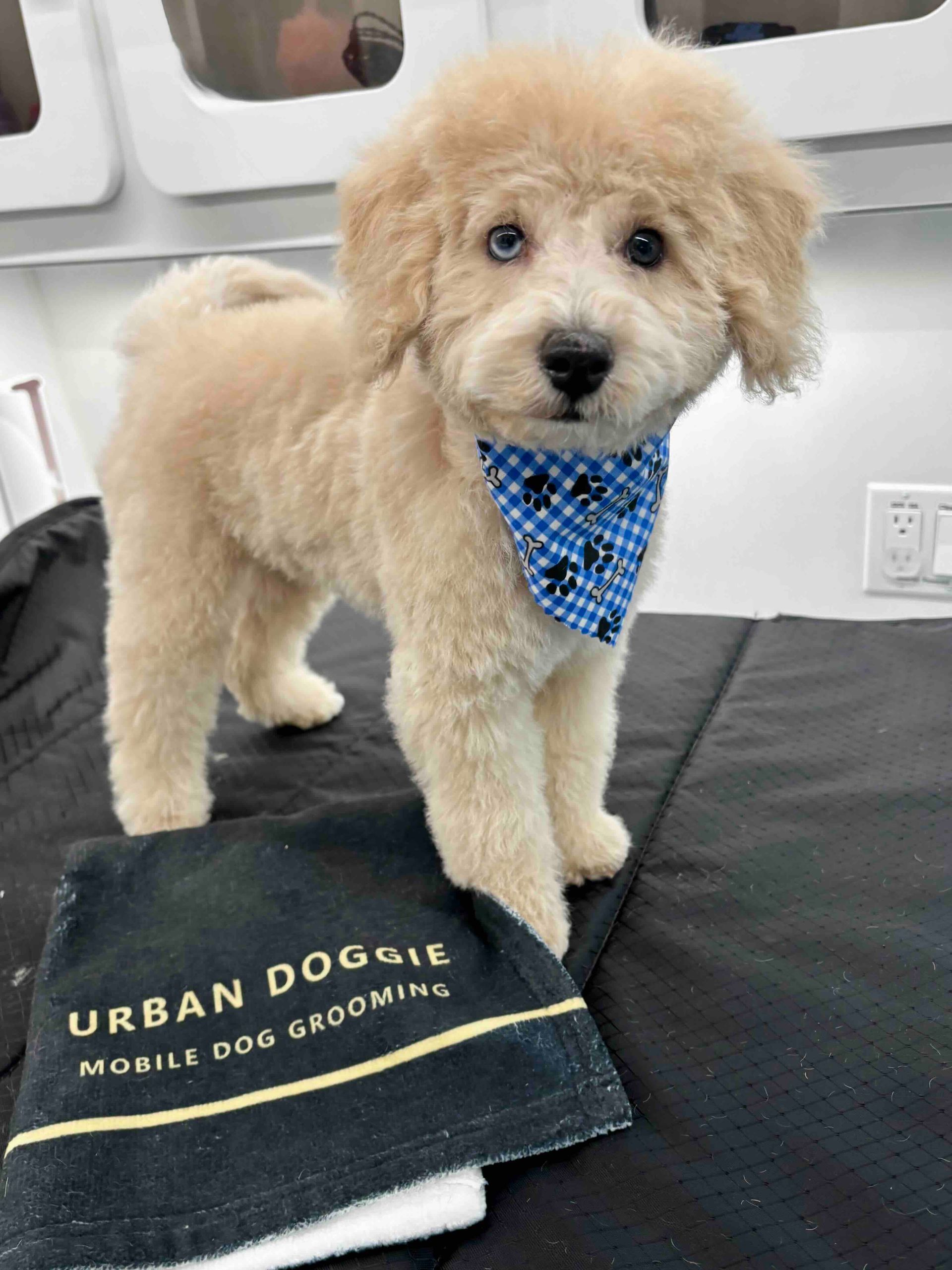
After over 22 years of dog grooming, mobile puppy grooming in Kirkland is something I feel more strongly about than almost any other service I offer — because getting it right sets up every appointment for the next fifteen years of your dog's life, and getting it wrong does the same. New puppy owners are often told to wait until six months or even a year before bringing their dog to a groomer. For small breed dogs, that advice causes real problems. As a puppy groomer I'll explain when to start, what a first groom actually includes, how the mobile grooming experience makes a genuine difference for puppies, and what you can do at home between visits to build habits that make every future appointment easier.
When Should My Puppy Have Their First Groom?
The ideal window for a small breed puppy's first professional grooming is between 10 and 16 weeks of age — right after they've had at least two rounds of vaccinations. That early window is when puppies are most open to new experiences, new sounds, and being handled by someone outside the family.
Waiting until six or twelve months feels safer, but for small breed puppy grooming it's one of the more consequential mistakes a new owner can make. Here's why.
What Happens When You Wait Too Long to Groom a Puppy
The most common scenario I see: a new Maltipoo or Cavapoo owner in Kirkland decides to wait until their puppy is "a little bigger first." By the time they call me, the puppy is eight or ten months old, has never had their paws touched by a stranger, has never heard clippers, and has mats forming behind the ears and under the legs.
Take an 11-month-old Yorkie I worked with from the South Juanita neighborhood near Juanita Beach Park. She had never been groomed. She was in pain from the mats I was working out. She was nervous when I held her paws for nail trimming. She would have been an entirely different dog to work with if she'd come in at 12 or 16 weeks. That's not her fault, and it's not her owner's fault — they just didn't know.
When puppies don't start grooming early, these problems tend to develop:
- Hair begins tangling and matting around the ears, belly, and legs as the coat grows
- The puppy becomes anxious about being touched by strangers and fearful of clippers and water
- Nail trimming becomes a struggle instead of routine
- Paw handling, face touching, and restraint all feel threatening instead of normal
Small breed dogs under 25 pounds are especially sensitive to new experiences. Their response to feeling restrained or handled unexpectedly is more intense than larger breeds — which means early positive experiences matter more, not less.
Puppy First Grooming: What the Appointment Actually Includes
When people hear "first groom" they usually think of a haircut. A first groom puppy appointment isn't about the haircut. It's about the introduction.
Your puppy is going somewhere new, being handled by someone they've never met, hearing sounds they've never heard. The goal of the first groom is to make sure they leave associating all of that with something safe — maybe even something enjoyable. Not perfect. Safe.
Here's what I do at every first puppy grooming appointment:
- A slow, relaxed welcome — no rushing into anything, just time to sniff around and orient
- Full-body handling practice: touching the face, paws, ears, and belly in a gentle, non-stressful way
- A warm bath at the right temperature and low pressure — gentle and calm from start to finish
- A quiet blow dry, starting at the softest setting with my hand between the dryer and their fur to buffer the sensation
- Light nail trimming — enough to get them used to the sound and feel, never forced
- Light ear cleaning — short and easy
- A light trim around the face and sanitary areas — enough to introduce the sound of clippers, not a full haircut unless they are good with it.
No cage before the appointment. No cage after. Your puppy stays with me throughout the entire session — one dog, my full attention, from the moment I open the van door to the moment I bring them back.
I don't aim for a perfect finished groom on day one. I aim for a puppy who leaves thinking grooming is fine — because that dog becomes a dog who lies still and relaxed on the table for the next decade.
The Puppy Haircut: What to Expect the First Time
The puppy haircut at the first appointment is intentionally minimal — a light tidy around the face, eyes, and sanitary areas rather than a full styled cut. This isn't about aesthetics. It's about introducing the sound and vibration of clippers to a dog who has never experienced them, in the calmest possible way.
A full styled puppy haircut comes later, once your dog is comfortable with the process. Trying to deliver a complete haircut at the first appointment, before trust is established, is one of the ways groomers create long-term handling fear in small breeds. I'd rather leave with a puppy who looks slightly unfinished and isn't afraid of me than one who looks perfect and never wants to come back.
Puppy Grooming Anxiety: What I Watch For in the Van
Puppy grooming anxiety doesn't always look like panic. The signs I watch for are quieter than most owners expect:
- Lip licking
- Whale eye — when the whites of the eyes become visible
- A tucked tail
- The puppy going completely still and flat — trying to make themselves small
- A shake that doesn't stop regardless of your tone of voice or how gently you pet them
- A nip at the brush, the clippers, or at me
None of that is a "bad puppy." It's a puppy who has reached their limit. If I push a puppy past their limit during the first groom, I'm building a lifelong association between grooming and fear. I won't do it.
If your puppy needs the appointment broken into pieces — bath now, face trim in ten minutes after a rest, nails last — that's exactly what we'll do. Sometimes I'll finish something minor at the next appointment instead. Fear free puppy grooming means the dog's experience comes first, always.
Mobile Puppy Grooming: Why Coming to You Makes All the Difference
The difference between mobile puppy grooming and a traditional puppy salon isn't just convenience. For a small breed puppy experiencing their first groom, the environment is everything.
In a traditional grooming salon, a puppy's first appointment often looks like this: a car ride to an unfamiliar building, the smell of dozens of other dogs, barking from nearby kennels, strangers handling them, and possibly a crate between steps. By the time the actual grooming starts, the puppy has already been processing stress for thirty minutes. A groomer focused on the appointment may not even notice the puppy is shaking in the back.
That's what I call a shutdown. Not the screaming or struggling — just a dog who has gone completely cold and still because they've run out of coping ability.
As a mobile puppy groomer pulling up directly to your Kirkland driveway, your puppy's experience is entirely different:
- No car ride to an unfamiliar place
- No lobby sounds, no building smells, no other dogs
- No strangers, no handoffs, no crates
- Just your home environment, my van, and one-on-one time with a consistent groomer
I've had puppy owners in Houghton tell me their puppy's face lights up when they see my van pull in. That's what small breed puppy grooming done right looks like. The van itself was purpose-built for small dogs — not converted from a cargo van, not retrofitted with a grooming station. I limited the number of dogs I take because I don't want puppies overstimulated. That decision was intentional from the beginning.
Puppy Grooming Services: Everything That's Included
Small breed puppy grooming at Urban Doggie is a complete, private, one-appointment experience. No add-ons, no hidden charges. Here's what every puppy groom includes:
- A relaxed welcome and introduction to the van environment at the puppy's own pace
- Full-body handling check — paws, ears, belly, face — so handling feels normal
- A thorough but gentle warm bath with small breed appropriate shampoo
- Blow dry at the softest setting, introduced gradually so the sound isn't frightening
- Light trim around the eyes, face, and sanitary areas — breed appropriate, not forced
- Nail trimming and paw pad care done gently with breaks
- Light ear cleaning
- Full-body health check for early signs of matting, skin issues, or ear problems
- A bandana to finish
Every appointment is completely cage-free. Your puppy spends the entire session with me — no waiting, no kennels, no strangers. Whether you think of it as a puppy spa or a puppy salon experience, the difference here is that there's only ever one dog in this van at a time.
Getting Your Puppy Ready: Before and Between Appointments
When to Groom a Puppy and How Often
When to groom a puppy for the first time is 10 to 16 weeks — but how often to groom a puppy after that depends on the breed and coat. Most small breed puppies do well on a four-to-six-week puppy grooming schedule once their adult coat starts coming in. The puppy coat transition — which happens roughly between four and eight months of age — is when the coat thins, mats more easily, and changes texture dramatically. This is actually when grooming frequency matters most, not least.
Kirkland's wet climate accelerates this. A Maltipoo or Cavapoo puppy walking in damp grass near Moss Bay or through the trails at Bridle Trails State Park picks up moisture and debris in a soft puppy coat faster than owners expect. Staying on schedule prevents small issues from becoming the kind of matting that makes an appointment harder on your dog.
Puppy Grooming at Home: Building Good Habits Between Visits
Puppy grooming at home between professional appointments is as important as the appointments themselves. The habits you build in these first months shape how your dog handles being touched for their entire life.
Here's what I recommend to every Kirkland puppy owner:
- Brush two to three times a week with a small breed slicker brush — short sessions, high praise, make it routine
- Touch paws, ears, and muzzle daily — not just before appointments. Short sessions on the couch with treats, letting the puppy pull away and come back. You want trust, not compliance
- After every walk, check behind the ears and under the chin — especially after Bridle Trails or any grassy area where debris collects
- Follow up brushing with a metal comb to catch any tangles the slicker missed
- Wipe the face daily if your puppy is a breed prone to tear staining — a damp cloth after meals keeps buildup from setting
For desensitizing to grooming sounds: run a hair dryer in another room while your puppy eats. Let the sound become background noise before you gradually bring it closer. That one step makes the first blow dry significantly less frightening.
Don't bathe your puppy at home before appointments — I handle all of that, and over-bathing dries out puppy skin, which makes grooming harder. A quick brush and a walk before I arrive is genuinely all you need to do.
Puppy Coat Care: What Changes in the First Year
Puppy coat care in the first year requires more attention than most owners anticipate because the coat is actively changing. Between four and eight months, most small breed puppies go through a coat transition — the softer puppy hair begins falling out as adult hair grows in, and during that overlap period, tangling and matting happen faster than at any other stage. Brushing consistently through this window prevents the kind of matting that requires a reset cut and makes the next appointment genuinely uncomfortable for the dog.
I can walk you through the correct brushing technique for your specific breed in about two minutes at your next appointment. The difference between brushing across the surface of the coat and brushing through to the skin is the difference between feeling productive and actually being productive.
Don't Wait to Book Puppy Grooming in Kirkland with Tia
Your puppy deserves a grooming experience built around their needs — not squeezed into a busy salon schedule between larger dogs. Urban Doggie's
puppy grooming service
in Kirkland ensures your small breed puppy gets a stress-free, cage-free experience. Every visit is private, unhurried, and genuinely personal. I'd love to meet your pup. New clients are always welcome.
Frequently Asked Questions
When should I schedule my puppy's first professional groom in Kirkland?
The ideal developmental window for a small breed puppy's first professional grooming falls strictly between 10 and 16 weeks of age, immediately following at least two rounds of core vaccinations. Waiting until six or twelve months is a common mistake that can lead to severe matting and deep-seated handling fears. This initial appointment functions as a vital behavioral training milestone rather than a dramatic cosmetic style. I focus on gentle tactile desensitization, teaching your puppy to feel safe while having their paws, ears, tail, and face meticulously handled. Staying on a consistent four-to-six-week routine through the rainy Pacific Northwest seasons protects their coat from contracting into painful knots after wet outdoor walks. By setting this positive standard early, we ensure your young dog views grooming as a peaceful, normal routine. The families in Kirkland who book early end up with dogs who actually enjoy their grooms. That's the whole goal.
Do you offer puppy introduction grooms for all breeds, or only small dogs?
I work exclusively with small breed puppies and adult dogs weighing under 25 pounds—nothing else. Small dogs aren't just little big dogs, and their early grooming shouldn't be treated like an assembly line. Traditional commercial retail salons can easily overwhelm an impressionable puppy with the loud background noise of massive, barking dogs and chaotic multi-hour crate waiting setups. By bringing my custom-built Mercedes Sprinter mobile van directly to your driveway, your puppy skips retail salon anxiety entirely. Backed by 22 years of small breed specialty experience, I provide your pup with quiet, one-on-one attention from hello to goodbye, ensuring a completely safe, cage-free sanctuary for young dogs across Kirkland's 98033 neighborhoods including Lakeview near Houghton Beach Park, Norkirk, and the Highlands.
What actually happens during a puppy's first groom with you?
Your puppy's first groom is about introduction, not perfection. I pull up to your Kirkland driveway, let your pup sniff around, and move through each step at their pace. That includes a warm bath, blow dry, light trimming, nail care, ear cleaning, and a full-body check. One-on-one. Cage-free. Every time. Your dog never waits in a kennel — before, during, or after. Everything included, one flat rate, built entirely around small breeds.
How do I prepare my puppy at home before the appointment?
Start touching your puppy's paws, ears, and muzzle gently a few days before — just short sessions on the couch with treats. Run a soft brush through their coat for a couple of minutes each day. You can also turn on a hair dryer across the room while they eat so the sound feels normal. Don't bathe your puppy beforehand — I handle all of that. A little prep at home makes a real difference in how fast your pup settles in with me.
Does Kirkland's rainy weather affect when I should groom my puppy?
Kirkland's wet seasons actually make early grooming more important, not less. Small breed coats — especially Maltipoos, Cavapoos, and Yorkies — mat faster when they're damp and unbrushed. Waiting through a rainy fall or winter means tangles form around the ears, belly, and legs before your pup ever sees a groomer. My van pulls right to your driveway, so your puppy never stands in the rain getting stressed before we even start. Mobile grooming isn't a perk. For small breeds, it's the smarter choice.
Is it okay if my puppy is nervous or has never been handled much?
Nervous puppies are exactly who needs my help. There's only one groomer here, it's me, Tia. You book me, you get me, every single time — no strangers, no handoffs, no chaos. Small dogs aren't just little big dogs — and their grooming shouldn't be either. I go at your puppy's pace, use quiet tools, and never force anything. Being gentle isn't optional — it's my personality and every day standard. Most nervous pups surprise their owners by how quickly they relax.