
Senior Dog Grooming in Kirkland WA
Grooming stressing your senior dog? • Regular salons making your senior nervous?
Get a Private, Certified Groomer with 22 Years of Senior Dog Expertise at your Door – Call (425) 820-1000
🎓 Certified Small Dog Specialist (Under 25 lbs)
🐾 22 Years of Professional Grooming
📍 Women Owned, Locally Operated in Kirkland, WA
🗓️ Fast & Easy Online
Booking 24/7
Expert, cage-free mobile senior dog grooming Kirkland families have trusted for over 16 years. Specialized exclusively for small breeds under 25 lbs in the 98033 area — including Everest, Bridle Trails, South Juanita and more — in a fully equipped mobile dog spa arrives at your door to eliminate salon anxiety. Backed by 22 years of certified expertise, I provide dedicated one-on-one attention, frequent rest breaks, therapeutic sensitive-skin baths, and gentle, low-impact handling with non-slip mats to keep arthritic joints completely comfortable. Don't have a Senior Dog? View all my dog grooming services
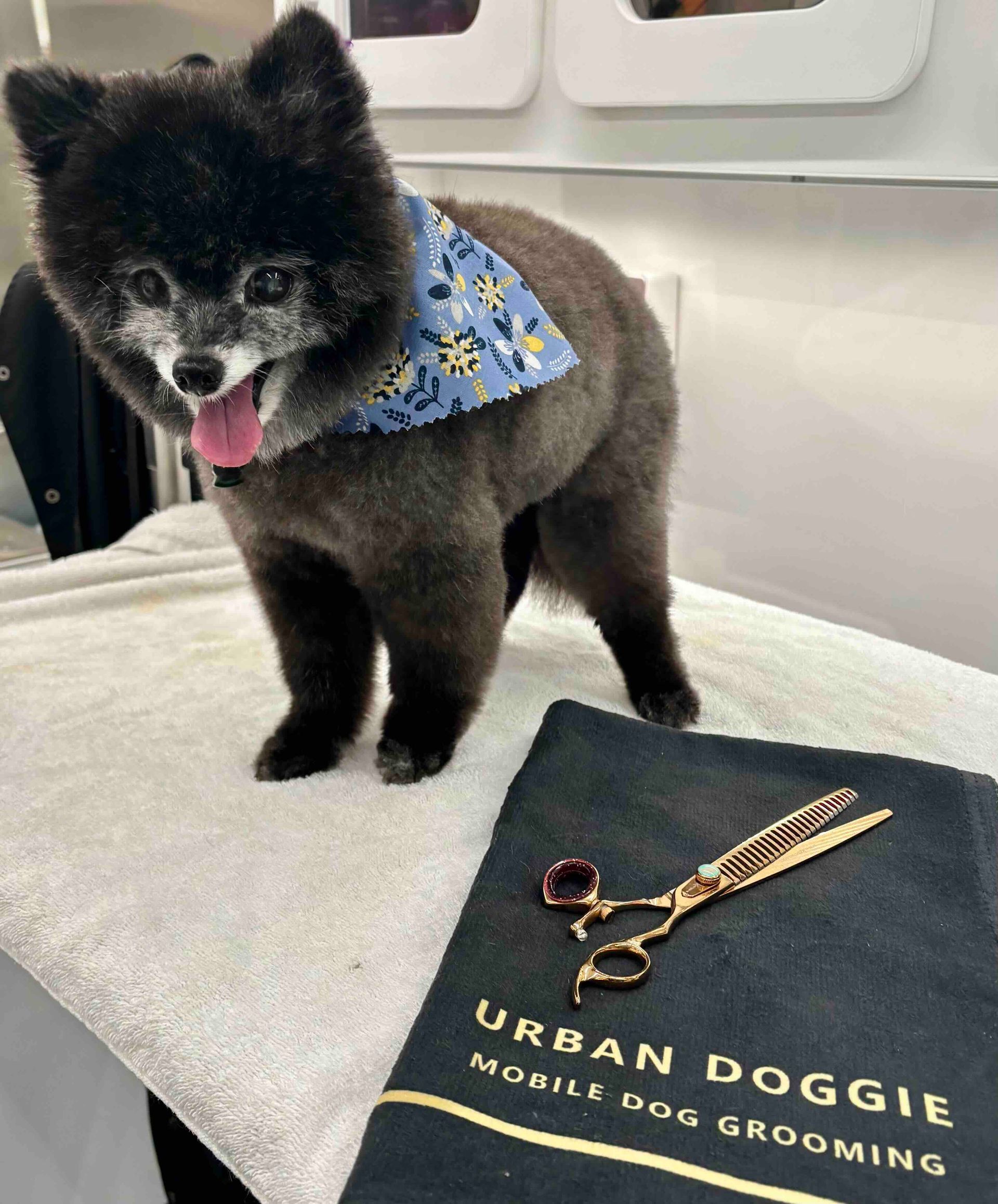
Senior dog grooming in Kirkland is something I do almost every day, and it's become one of the most meaningful parts of my work. Small dogs live long lives — a 12-year-old Shih Tzu or a 14-year-old Yorkie still needs regular grooming, but their bodies have changed in ways that make how that grooming happens just as important as whether it happens at all. Thinner skin, arthritic joints, reduced hearing and vision, and anxiety that has gotten worse rather than better with age — all of it requires a different approach than what worked at three years old. As a mobile groomer, I'll explain what age does to small breed dogs, what every senior appointment looks like, and why so many Kirkland families with older dogs have moved to mobile grooming and never gone back.
Old Dog Grooming: Why Senior Dogs Deserve an Approach Catered to Them
Your older dog isn't the same dog who used to like baths and grooming. And that's fine. What isn't fine is treating like they still do.
The noise level of a busy grooming salon, the cage waiting before and after the appointment, the strangers handling the dog between steps — these things stress younger dogs. For senior dogs, they're genuinely hard on the body. A dog with arthritic joints standing on a grooming table for an hour without breaks is in pain. A dog with diminished hearing and vision in an unfamiliar, chaotic environment is frightened in a way that doesn't show up until you get them home and they shake for hours.
This is why there are a large number of dog owners on the Kirkland waterfront who specifically seek out a senior dog groomer who works differently. Here's what aging does to small breed dogs that directly affects how I approach every appointment:
- Arthritic joints mean extended standing is painful — rest breaks are essential, not optional
- Skin becomes thinner and easier to tear under clippers if pressure isn't adjusted
- Lumps, warts, and growths appear that need to be carefully identified and avoided
- Anxiety that once was manageable often intensifies with age
- The coat produces different oils and mats faster in unexpected places
Perhaps you've called around asking about elderly dog grooming for your older Maltipoo or Havanese, you've may have heard a version of: "We'd be happy to take them, but we can't make any special accommodations." That's the conversation that leads families to me. I don't have a front desk. No strangers are introduced. When you book with Urban Doggie, you dog spends every minute with me from the moment I open the van door to the moment I close it. One dog at a time, no cages, at a pace that works for the dog in front of me — not the schedule I have to keep.
Dog Grooming for Senior Dogs: What Age Does to the Coat and Body
Understanding what actually changes as a small dog ages helps explain why senior dog grooming has to look so different from a standard appointment.
Arthritic Dog Grooming: Working Around Joints That Hurt
Arthritic dog grooming is something I've thought carefully about for a long time — because getting it wrong is obvious and immediate. An older dog with arthritis or joint stiffness can't stand on a grooming table for an extended period without discomfort, and a dog in discomfort fidgets, resists, and gets labeled "difficult" by others who don't understand why.
Grooming a dog with arthritis means adjusting everything around the joint issue:
- I observe the dog stepping into the van — which leg they favor, how stiff they are when they first move — before I even start the groom
- I use a low-profile grooming table with a non-skid surface so there's no jumping or climbing required
- I lift gently and position the dog in ways that don't torque sore joints
- Breaks happen whenever the dog needs them, not on a time schedule
- I never apply pressure to a limb to hold a position — if it's not comfortable, I find another way
The goal for every arthritic dog is to finish the appointment with the dog feeling better than when we started — not worse. For families in Norkirk near the elementary school who've watched their older dog come home exhausted and stiff from other groomers, this difference is usually visible immediately.
Senior Dog Skin Care and Coat Changes
Senior dog skin care often requires more awareness than many owners may realize. As small dogs age, their skin gets thinner, loses some of its elasticity, and becomes easier to nick or irritate with clippers. The coat often changes texture too — a Maltipoo near Kirkland Middle School in Norkirk that had a silky, easy coat for years may suddenly be developing overnight tangles at nine or ten years old. That's not neglect; it's the coat changing as the dog ages.
Older dogs also produce more skin oils, which affects how quickly the coat gets greasy and how the hair holds a trim. I adjust water temperature (slightly warmer for seniors, since older dogs lose body heat faster), and brushing pressure depending on what I'm seeing and feeling in the coat, it is not a one-size approach.
Senior Dog Nail Care: Why It Matters More With Age
Senior dog nail care is one of the most overlooked issues I encounter, and one of the most consequential. Older small dogs move less — they aren't wearing their nails down on pavement the way they did at three years old. When nails grow too long, they change the way the dog distributes weight when standing and walking, and that puts extra strain on joints that are already stiff.
I once met a small Havanese near Peter Kirk Park who was practically hopping — not because she was sick, but because no one had noticed how long her nails had gotten. She wasn't in distress; she was just overdue. For senior dogs I see regularly, I trim nails in careful, short passes with intervals, never applying cumulative pressure that builds up in arthritic paws. It's the small things that makes a large difference in how comfortably a senior dog moves for the rest of the week.
Senior Dog Groomer: What Every Appointment Looks Like
Every time a senior dog comes to me here in Kirkland, I begin the appointment before a brush even touches them. I watch how the dog moves getting into the van. I notice whether they favor one leg, whether they seem uncertain on their paws, whether there's stiffness in the first few steps. All of it is information that shapes how the next hour goes.
A typical senior small breed appointment looks like this:
- I gently lift your dog or help them in at a pace that works for them — no jumping, no rushing
- A warm bath at a slightly higher temperature than I'd use for a younger dog, since older dogs lose heat faster
- Slow, careful brushing that avoids thin skin, sensitive spots, and any lumps or growths
- Nail trimming done in careful passes with breaks between, never applying too much pressure
- A trim tailored for comfort over style — shorter may be easier on an older dog even if longer is what they've always had
- Multiple rest breaks, as many as needed, whenever the dog shows signs of tiredness or discomfort
The primary difference between my approach and a traditional salon is pace. I don't rush. From the moment your dog steps in to the moment I bring them back to your door, there's no caging and no waiting. Your dog never sits in a kennel so I can squeeze in another appointment. Several clients in Moss Bay whose Shih Tzus and Yorkies used to come home shaking from other groomers now describe their dog falling asleep in my arms by the end of the session. That's not an accident — it's what happens when the environment is built around the dog's needs rather than a production schedule.
Mobile Senior Dog Grooming: Why It's the Right Choice
Mobile senior dog grooming removes the parts of a traditional grooming experience that are hardest on older dogs before the appointment even starts. No car ride to an unfamiliar building. No lobby full of noise and other animals. No waiting in a crate before the appointment begins. Your senior dog steps from their own home environment directly into a calm, one-on-one space — and that alone changes everything about how they respond.
At home senior dog grooming isn't just a convenience for the owner. For a dog with diminished hearing and vision who finds unfamiliar environments disorienting, staying close to home is genuinely less stressful. For a dog with arthritic joints, skipping the car ride and the waiting room means they arrive on my table with less accumulated tension in their body. The families in Norkirk and near the Kirkland waterfront who made the switch specifically for their senior dogs tell me consistently: my dog comes home calmer. That's the whole point.
Senior Dog Grooming Anxiety: Why One-on-One Makes the Difference
Senior dog grooming anxiety is one of the most common reasons Kirkland families contact me. "She was fine at the groomer for years, and now she shakes the entire time" — I hear this weekly. As dogs age, anxiety that was manageable often becomes more pronounced. The same level of noise and chaos that a dog tolerated at five becomes genuinely overwhelming at eleven.
Anxious senior dog grooming in a traditional salon environment — with other dogs barking nearby, strangers handling the dog between steps, and crate waiting that can feel disorienting for a dog with reduced hearing and vision — is a recipe for a difficult appointment that gets harder every time. Working one-on-one in a quiet, purpose-built van removes nearly all of those triggers. I've worked with senior dogs whose owners told me they'd given up on professional grooming entirely because the dog's anxiety had become too severe. In a calm, familiar environment with a consistent groomer, most of those dogs settle faster than anyone expected.
Recognizing When Your Aging Dog Needs a Groom
Often you don't realize it's time until you're already looking at a problem. As dogs age, coat and skin issues tend to creep up quietly. You pick up your Shih Tzu one day and feel a mat you swear wasn't there last week. Your Yorkie is obsessively licking their feet and you can't figure out why.
Here are the warning signs to watch for in an older small breed at home:
- New mats forming much faster than you're used to — especially near the neck, behind the ears, or tucked under the legs
- Nails clicking loudly on hard floors, or beginning to curl under toward the paw pad
- A musty or greasy odor that lingers even after brushing
- Flaky skin coming off on your hand when you brush, or a flinch when you touch certain areas
- Crusting or debris building up around the eyes
Senior Dog Matting: What's Different About Aging Coats
Senior dog matting is different from matting in younger dogs — it forms faster, hides more easily, and is harder on the dog when it's discovered. As small dogs age, their coats produce more oil, which causes hair to clump and mat differently than before. The texture changes. A coat that behaved one way for years starts behaving differently in what seems almost overnight.
When matted fur sits against an older dog's thinner skin, the pressure and moisture it traps leads to hot spots, irritation, and sometimes infection. Tangled fur pulls at the skin constantly — a discomfort the dog can't communicate directly. By the time an owner notices something's wrong, the mat has usually been there long enough to cause real irritation. As the American Veterinary Medical Association notes in their guidance on senior pet care, the older a dog gets, the more frequently grooming and health checks need to happen — because their needs can change faster than expected.
The bottom line: if you notice even one of these signs, that's enough to call. I work exclusively with dogs under 25 lbs, so everything about the appointment — pressure, pace, tools — is designed for small seniors specifically.
Grooming Senior Dogs: How to Prepare for the Appointment
The morning of the appointment, keeping things low-key is the goal. Senior dogs have less energy and more sensitivity to stress than they did in younger years. Here's what I've found makes the biggest difference:
- Feed a small meal about two hours before I arrive. An empty stomach makes older dogs feel weak; a very full one can cause nausea during the bath. Two hours gives enough time to settle.
- No flea medications within 48 hours before the appointment. Applied too recently, the water during the bath can irritate the skin — and older skin is already more sensitive.
- Tell me about any current medications. Whether your senior is on joint supplements, seizure medication, or anything else, I need to know what's in their system so I can pay attention to the right things during the groom.
- Remove collars and harnesses before I arrive. Collar pressure on older skin can cause irritation, and I want a clear look at the neck and chest area for any matting or skin changes underneath.
- Keep your own energy calm. Senior dogs are attuned to their owners in a way that goes deeper with age. If you're anxious, they feel it. If you're relaxed when I pull up, they read that too.
There's no need to apologize for the state of your senior dog when I arrive. Accidents, food in the beard hair, increased eye drainage — these are normal parts of aging, and they're exactly why senior grooming appointments exist. I've seen it all.
What to Watch for After Your Senior's Groom
Many senior small dogs feel lighter and more settled immediately after the appointment. But the hours after a groom are worth paying attention to, especially for older dogs.
For the first few hours after I leave, keep an eye out for:
- Scratching or chewing one spot repeatedly — may indicate an irritated area I should know about
- Shaking or trembling that lasts more than 30 minutes
- Noticeable stiffness or limping from standing during the appointment
- Loss of appetite or unusual fatigue that seems out of character
Most of the time, all a senior dog needs after a groom is a warm nap and a treat. Because smaller breeds lose body heat faster after a bath, keep the house cozy and hold off on any outdoor time for a few hours. A blanket is always a good idea.
Some stiffness or mild limping after a senior appointment is not unusual — older joints don't love standing for any length of time, even with breaks. It typically resolves by the next morning. I'm also always happy to talk through what's normal after a senior groom — 22 years of doing this means I know what to expect, and I'd rather answer a question than have a family worry unnecessarily.
Don't Wait to Book Senior Dog Grooming in Kirkland with Tia
Your senior dog deserves a grooming experience built around their needs — not squeezed into a busy salon schedule between larger dogs. Urban Doggie's
senior dog grooming service
in Kirkland ensures your small breed senior gets a stress-free, cage-free experience. Every visit is private, unhurried, and genuinely personal. I'd love to meet your pup. New clients are always welcome.
Frequently Asked Questions
How often should a senior dog be groomed?
How often to groom a senior dog in Kirkland depends on the breed and coat, but most senior small breeds do best every four to six weeks. Older dogs produce different skin oils, and their coats mat faster — especially around the collar and behind the ears. Regular grooming helps monitor skin condition, detect lumps or irritations early, and keeps coats free of mats that can cause discomfort — especially important for aging dogs with thinner or more sensitive skin. More frequent visits actually keep each session shorter and easier on your dog's joints and nerves.
What special accommodations do you make for senior dogs during grooming?
Special accommodations I use for senior dogs include using non-slip mats, gentle handling techniques, and take frequent breaks to keep senior dogs comfortable. I avoid prolonged standing positions for dogs with arthritis and use moisturizing, low-irritant shampoos suited for sensitive senior skin.
Can you groom a senior dog with health conditions or mobility issues?
Yes. I am very experienced working with senior dogs that have health and mobility issues like arthritis, hip dysplasia, or other mobility challenges. I adapt my techniques to each dog's comfort level and always prioritize their wellbeing over speed or a perfect finish.
How is senior dog grooming different from a regular grooming appointment?
Senior dog grooming moves slower, gentler, and with a lot more watching. I adjust everything — water temperature, brush pressure, how long your dog stands — based on what their body shows me that day. Cage-free from start to finish, your older dog never waits in a kennel between steps. With 22 years of hands-on experience, I can feel tension in a senior dog before they even flinch. That's the difference between a stressful groom and one your dog actually tolerates well.
Why is mobile grooming better for senior dogs in Kirkland?
Mobile grooming is better for senior dogs because it eliminates the need to transport your senior dog to a busy salon, reducing physical stress on arthritic joints and minimizing anxiety. In Kirkland, Urban Doggie comes directly to your home so your dog stays in a familiar environment throughout the entire grooming session.
My older dog shakes at the groomer now — can mobile grooming actually help?
Yes, and it's one of the most common things Kirkland families tell me when they call. Coming to you isn't just easier — it's genuinely better for your dog. No car ride to an unfamiliar place. No barking dogs nearby. No waiting in a crate. I come right to your driveway, and your senior dog stays in a familiar, calm environment the whole time. No front desk. No strangers. When you book, you get me — from hello to goodbye. That alone changes how anxious older dogs respond.
Are long nails really that serious for an older small dog?
Long nails are one of the most overlooked problems I see in senior small dogs. Overgrown nails change how your dog walks, and that puts extra strain on joints that are already stiff. I've seen small dogs near Peter Kirk Park practically limping — not because they were sick, but because their nails had gotten too long. Senior dogs move less, so nails don't wear down naturally anymore. The Urban Doggie 15-Step Signature Spa includes nail trimming done in short, careful passes — no pressure buildup, no stress.
What should I tell you before you groom my senior dog for the first time?
Tell me everything — the more I know, the better I can care for your dog. Let me know about any lumps, sore spots, joint issues, or changes in vision and hearing. If your dog has a bad leg or a spot they hate being touched, I need to know before I start. I work exclusively with small breed dogs under 25 lbs., so I'm already familiar with the common issues small seniors face. Nothing you share will surprise me, and it helps me make the appointment easier on your pup.
Why do so many Kirkland families with older dogs choose Urban Doggie over a traditional salon?
I'm the senior dog groomer in Kirkland families have trusted for 16 years — and a big reason is how I handle senior dogs specifically. Your small dog deserves a grooming experience built around their needs, not a busy salon schedule. There's only one groomer here, it's me. You book me, you get me, every single time. No cages. No crowds. No rushing. Families from Moss Bay to Norkirk come back because their older dogs actually come home calm — not shaking, not exhausted, just clean and relaxed.